01 / THE FRAMEWORK
What Incoterms rules actually cover
The International Chamber of Commerce publishes Incoterms® rules to clarify selected delivery obligations between sellers and buyers. The rules cover areas such as delivery, allocation of some costs, transport and the point at which risk transfers. They do not determine ownership transfer, payment terms, applicable law or every contractual obligation.
Always record the full expression—for example, the chosen rule, named location and Incoterms® 2020—inside the contract. The named place is not a minor detail; it helps define where obligations apply.
Action checklist
- Record the exact named delivery place or port.
- Confirm the Incoterms version in the contract.
- Separate risk transfer from ownership and payment terms.
02 / EX WORKS
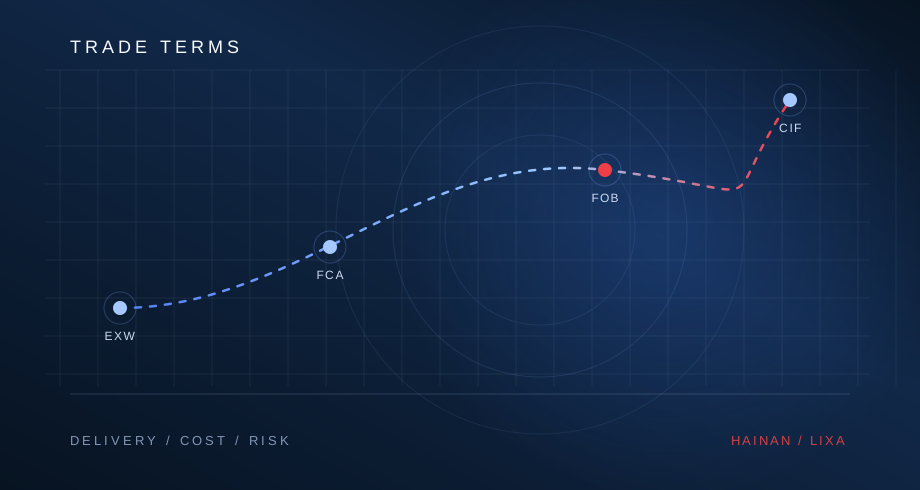
EXW: maximum collection responsibility for the buyer
Under EXW (Ex Works), the seller makes goods available at the named place, generally without loading them onto a collecting vehicle. The buyer takes on extensive transport and export responsibilities. Cross-border buyers sometimes discover that practical export formalities are harder to arrange than expected.
An EXW unit price may look attractive but can exclude substantial collection, handling and export costs. Buyers should check whether their logistics partners can lawfully perform the required tasks.
Action checklist
- Clarify loading and pickup responsibilities.
- Check export-clearance practicality before accepting EXW.
- Compare full costs against alternative terms.
03 / FREE ON BOARD
FOB: a vessel-based delivery point
FOB (Free On Board) is intended for sea or inland waterway shipments. The seller delivers the goods on board the vessel nominated by the buyer at the named port of shipment. Risk transfers at that point; responsibility for the main carriage normally rests with the buyer.
For containerized goods handed to a carrier at a terminal before loading, FCA may often fit the actual handover better than FOB. The appropriate term depends on the real logistics sequence.
Action checklist
- Specify the named port of shipment.
- Confirm who books the vessel and controls the shipping instructions.
- Review FCA where the goods are handed over before loading.
04 / COST, INSURANCE & FREIGHT
CIF: freight paid by the seller, risk transferred earlier
With CIF (Cost, Insurance and Freight), the seller contracts and pays for carriage to the named destination port and obtains the level of cargo insurance required by the rule. However, risk generally passes when the goods are on board at the shipment port, not when they arrive at destination.
That difference between paying freight and carrying transit risk is easily misunderstood. Buyers should review insurance coverage, policy terms, shipment visibility and destination handling costs.
Action checklist
- Verify the level and scope of insurance coverage.
- Confirm destination-port charges and local delivery exclusions.
- Do not assume CIF means risk stays with the seller until arrival.
05 / THE DECISION
Choose a term that matches your operating model
The best rule depends on the cargo, transport mode, buyer capability, freight relationships and where goods are actually handed over. Request comparable landed-cost scenarios and ask the freight forwarder to review the proposed responsibility split.
For a significant shipment, put the final term and named place in the signed agreement and align the purchase order, invoice and shipping instructions. This guide is general trade information, not legal or customs advice.
Action checklist
- Match the rule to transport mode and handover.
- Ask the logistics team to validate responsibilities.
- Make documentation and contractual wording consistent.
Clarity creates room to move.
A coordinated trade process starts with shared expectations and ends with a documented handover. These guides offer general business information; product-specific compliance, contractual and customs decisions should be confirmed with qualified specialists.